
Commercial Real Estate Intelligence Is No Longer About Buildings
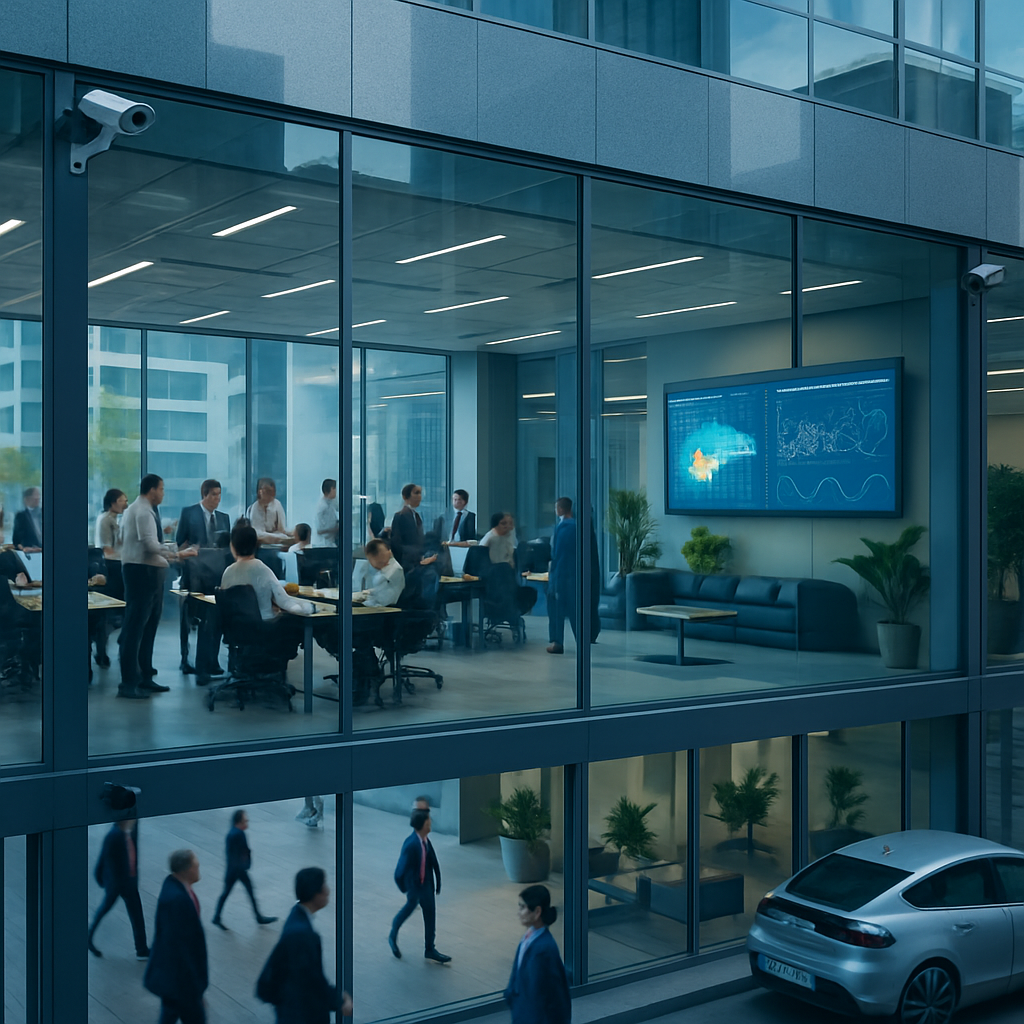
It Is About Business Intelligence That Learns How Space Performs
Commercial real estate portfolios generate vast amounts of operational data every day, yet most organizations still lack true business intelligence derived from how their spaces are actually used. Office buildings, retail centers, mixed-use developments, and multi-tenant commercial properties are already equipped with cameras and operational systems, but these technologies were designed to record activity, not to learn from it. As a result, owners, operators, and asset managers continue to rely on static metrics and lagging indicators to evaluate performance. Our self-learning TRUE AI changes this dynamic by continuously interpreting real-world behavior and transforming existing infrastructure into a living intelligence layer. NexaiQ enables commercial real estate teams to move beyond reactive oversight and into adaptive, intelligence-driven portfolio management without requiring disruptive rip-and-replace investments.
From Commercial Property Data to Business Intelligence
For decades, commercial real estate performance has been assessed through fixed indicators such as occupancy, lease terms, tenant mix, and operating expenses. While these measures remain essential, they provide only a partial picture of how commercial environments actually function. The daily performance of office buildings, retail centers, and shared commercial spaces is shaped by how people move through them, how amenities are used, and how operational decisions respond to changing patterns of behavior.
Modern commercial properties already generate continuous streams of data. Cameras monitor lobbies, elevators, corridors, parking structures, and storefronts. Access systems capture movement across tenant and public areas. Environmental systems reflect how space is occupied throughout the day. Despite this, much of the data produced across commercial portfolios remains underutilized. Information is collected, but rarely transformed into intelligence that informs operational strategy, asset optimization, or long-term value creation.
Why Traditional Commercial Systems Fall Short
The limitation lies in how most commercial property technologies were built. Video systems record footage. Analytics apply predefined rules. Alerts are triggered based on assumptions about how a space should behave. These systems are static by design, while commercial environments are anything but static. Tenant occupancy fluctuates, retail traffic shifts by season and time of day, and mixed-use spaces continuously evolve. Fixed rules quickly become outdated, producing excessive noise and masking meaningful insight.
As portfolios scale, this problem intensifies. Commercial real estate operators manage properties across geographies, building types, and vintages, often relying on a patchwork of systems and vendors. Static analytics struggle to accommodate this variability without constant manual adjustment. Property teams become burdened by alerts rather than empowered by intelligence, and leadership is left without a clear, real-time understanding of portfolio performance.
Self-Learning AI as Commercial Business Intelligence
TRUE AI fundamentally changes how business intelligence is created within commercial real estate environments. NexaiQ does not rely on rigid thresholds or one-time configuration. Instead, it continuously learns how each commercial property behaves in practice, observing patterns over time and refining its understanding as tenant usage, traffic flow, and operational conditions change.
This approach allows intelligence to adapt at the same pace as the property itself. NexaiQ develops contextual awareness of what is relatively normal within each building, enabling it to surface meaningful insight while filtering out routine activity. Over time, business intelligence becomes more accurate, more relevant, and more aligned with actual commercial operations, without requiring constant manual tuning.
Unlocking Portfolio Value Without Rip and Replace
Commercial real estate portfolios are complex, often spanning decades of development and renovation. Rip-and-replace technology strategies introduce capital strain, operational disruption, and deployment risk that few organizations can justify at scale. NexaiQ is designed to operate above existing camera infrastructure, transforming deployed systems into sources of intelligence rather than constraints.
By decoupling intelligence from hardware, commercial real estate owners and operators can modernize portfolios incrementally. Existing assets are extended, total cost of ownership is reduced, and return on investment is accelerated. Intelligence improves without interrupting tenant operations, aligning modernization efforts with the financial and operational realities of commercial property management.
From Surveillance to Commercial Operational Insight
As intelligence becomes adaptive, its value extends beyond traditional security and loss prevention. While safety remains foundational, the deeper opportunity lies in operational understanding. The business intelligence provided by TRUE AI enables commercial real estate teams to understand how space is actually used across offices, retail floors, common areas, and parking facilities.
These insights support decisions around staffing, space utilization, tenant experience, and operational efficiency. Patterns of movement and usage highlight congestion, underutilized areas, and emerging friction points. Instead of reacting to isolated incidents, operators gain a continuous understanding of how their commercial environments perform, enabling more informed, proactive management.
Portfolio-Level Visibility With Local Adaptation
At the portfolio level, NexaiQ delivers consistency without sacrificing the individuality of each commercial property. Office towers, retail centers, and mixed-use developments differ in layout, tenant behavior, and operational demands. NexaiQ learns locally at each site while providing centralized visibility across the portfolio.
This balance enables commercial real estate leadership to identify trends, benchmark performance, and allocate resources with confidence across diverse assets. Intelligence scales without forcing uniformity, allowing portfolios to operate as connected systems rather than isolated properties.
Business Intelligence That Compounds Over Time
Commercial real estate is entering a period where adaptability is no longer optional. Rising operating costs, evolving tenant expectations, and increased investor scrutiny require intelligence that evolves alongside assets and behaviors. Self-learning business intelligence transforms existing commercial environments into continuously improving sources of insight.
NexaiQ enables commercial real estate teams to move beyond static oversight and into intelligence-driven portfolio management. Buildings become active contributors to decision-making rather than passive structures. In this new paradigm, intelligence is not defined by how much data a property collects, but by how effectively that data is understood and applied. For commercial real estate organizations focused on long-term value, self-learning business intelligence is no longer optional. It is foundational.
Continue the conversation
Explore more perspectives from the Soterix team or reach out to discover how we can partner with you.